

Accolades
- Home
- /
- Accolades
- (916-532-9699)
Summary:
- An accolade identifies one's expertise and ability within their craft--this is a means of peer recognition.
- Books & Publications, Speaking Engagements, and Awards.
Books:
A little over a decade ago, I became very interested in preserving information that relates to the important aspects of landscape lighting design. Initially, this dealt primarily with Frank B. Nightingale’s efforts over his life. And more recently, I have begun to consolidate my research, experience, and developments by authoring my first book, “Lighting Design Awareness.”
I intend to write several more books as I get closer to retirement. I believe this is extremely important for our profession, as there are relatively few who have extensive knowledge and experience that are willing to do this. The only way our profession will advance is through efforts like this. The following are my current works:
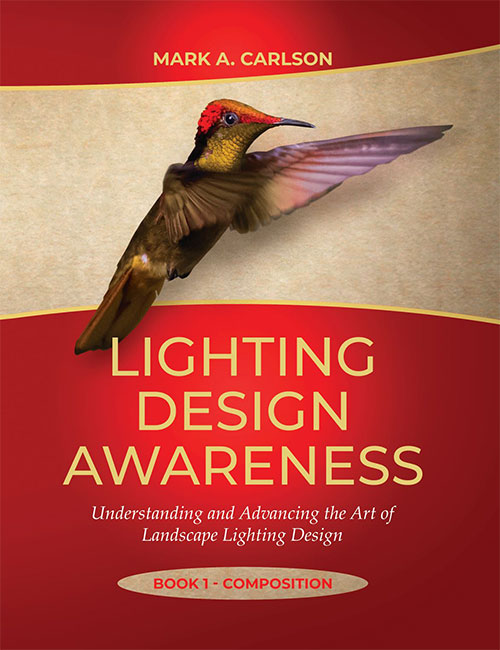
‘Lighting Design Awareness’ (2022)—I authored this book entirely to serve lighting designers and especially the landscape lighting profession. It promotes my consolidated studies to development of a set of compositional principles that can be applied to landscape lighting design. Essentially, this is a new approach for designers to implement so that ‘good’, sound principles are utilized when building out lighting systems. I believe this should be part of a foundational training program to advance practitioners in this art form.
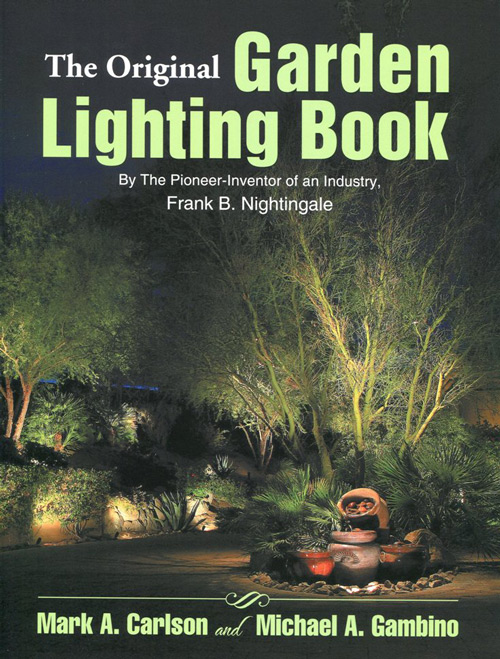
‘The Original Garden Lighting Book’ (2013)—a re-publication effort to continue to share the writings of Frank B. Nightingale from his book, “Garden Lighting” (1958). I co-authored this book with Mike Gambino and we included several commentary sections to support and show Nightingale’s relevance today’s practice. In addition, we included several photos to make the book more current. Frank Nightingale was known as the “father of garden lighting”, as he established this discipline in 1934.
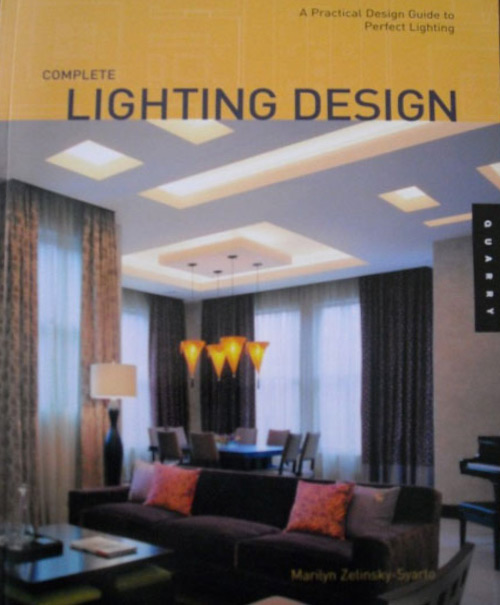
‘Complete Lighting Design’ (2006)—authored by Marilyn Zelinsky Syarto where she featured me in two chapters. I was only a support element for the book, as it applied to landscape lighting applications.
Publications:
For most of the decade beginning in 2010, I began writing several articles and reaching out to the trade profession at a larger scale. I saw many issues or problems occurring within my profession, so I felt I should speak up about them. From 2013-2015, I provided a professional blog series, which was part of this effort. Here are some of my works:
Professional Lighting Design—Industry Articles:
- ‘Time For Change—Disturbing Issues & Trends’ (#86, 2013)
- ‘To Be and Not To Be’ (#96, 2015)
- ‘Light and Nature’ (#107, 2017)
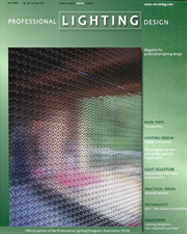
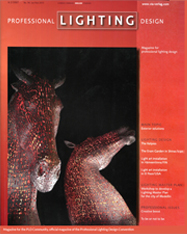
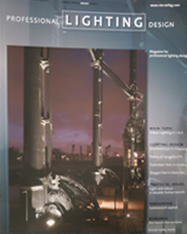
Illumination Engineering Society (IES)—Visionary Challenge (2020):
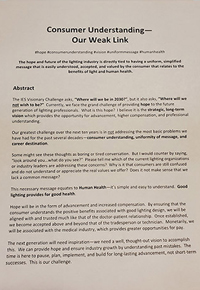
- ‘Consumer Understanding—Our Weak Link’ (2020)
Note: This paper was selected by an IES panel group as 1 of 20 to be published in a book they developed. I gave several opinions on what I believed to be concerning problems for the lighting industry, as it relates to where our industry is going in 10 years (2030). Many of my predictions and points are going to prove to be true, as nothing has changed since 2020. I intend to comment publicly about all of this once we reach this deadline.
Experiential Landscape Lighting Initiative (ELLI)—Guides & Specifications:

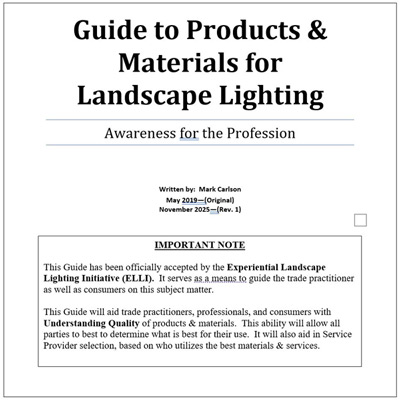
‘Guide to Materials & Products’
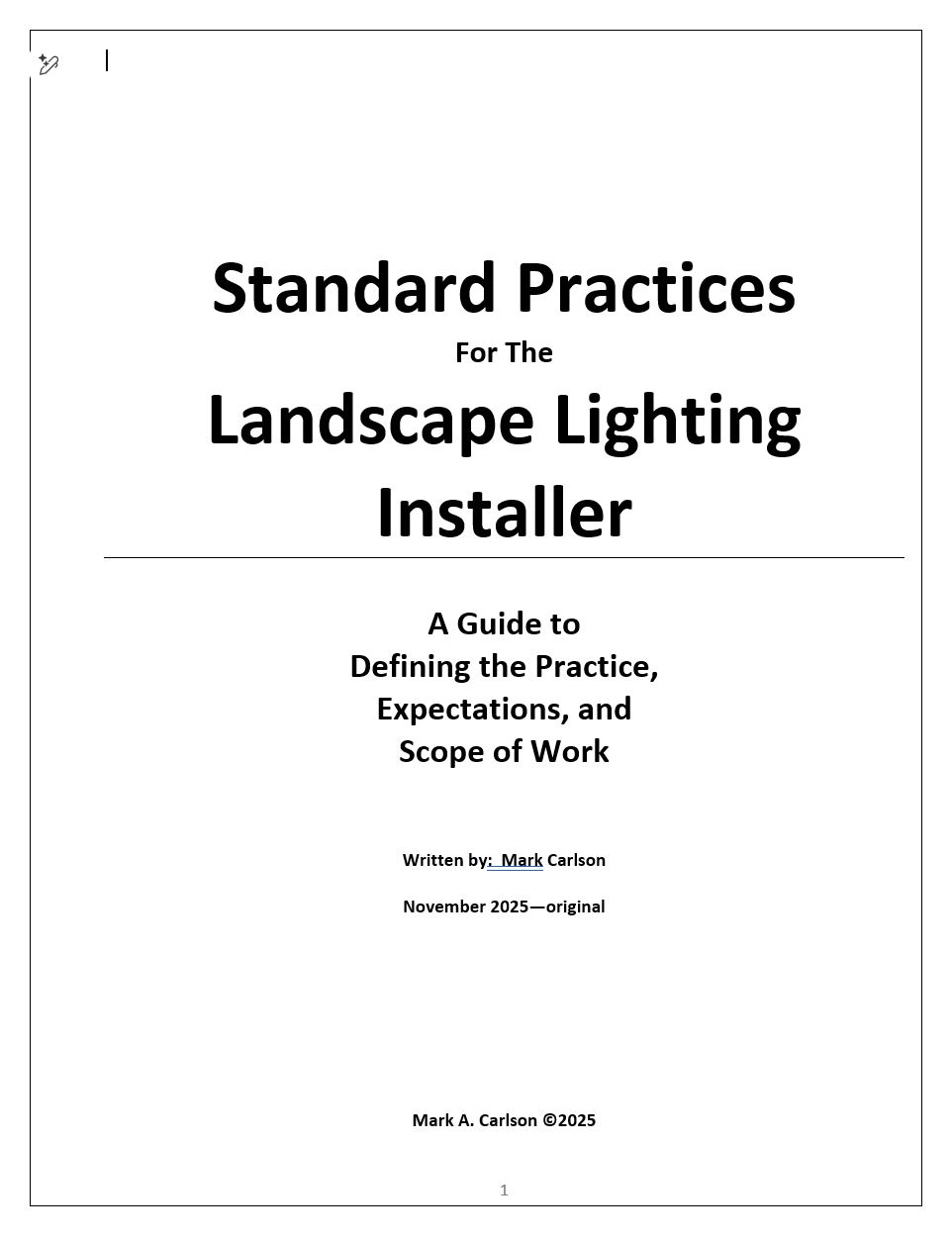
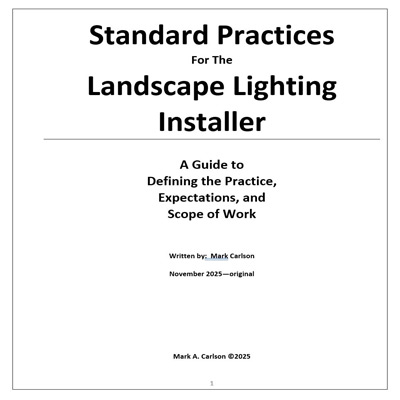
‘Standard Practices for the Landscape Lighting Installer’
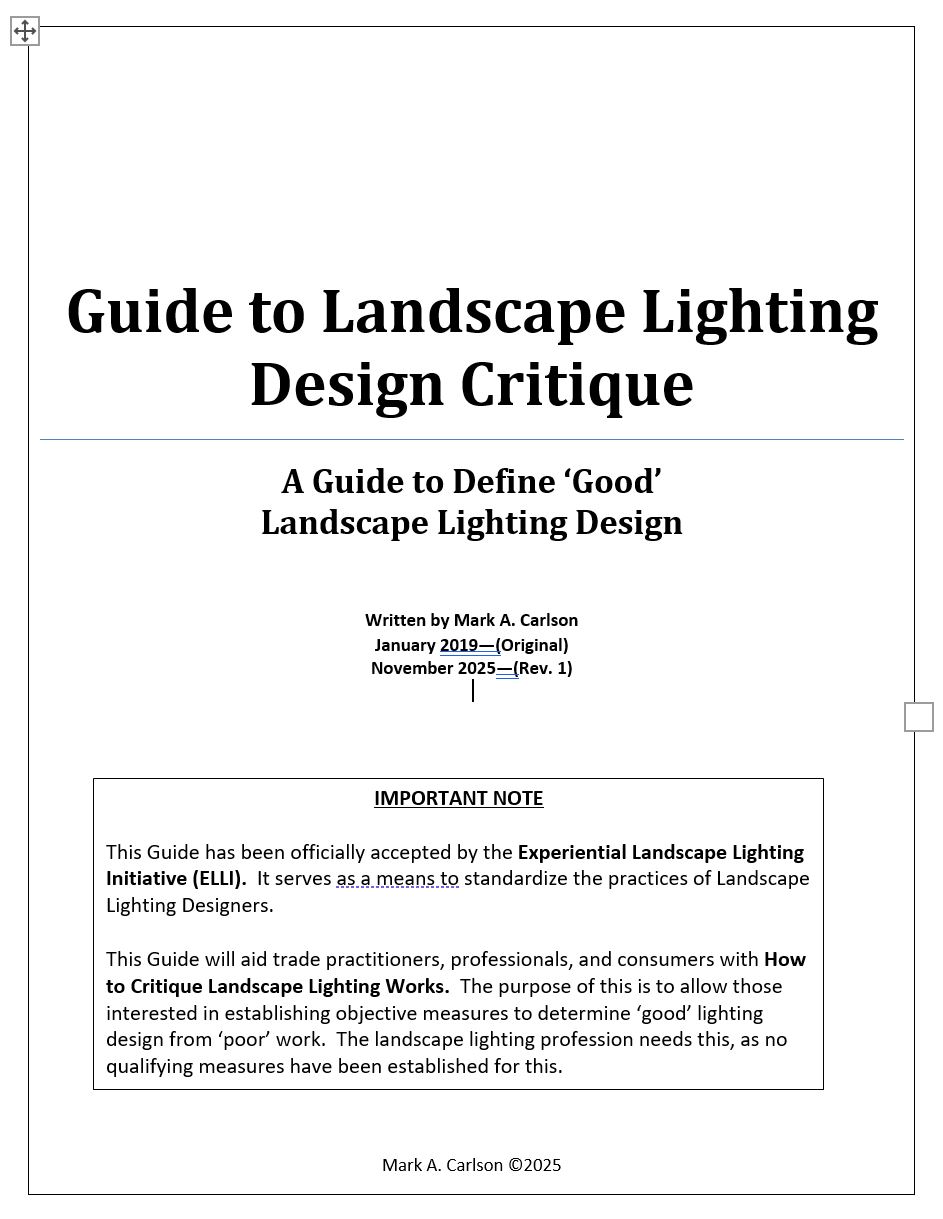
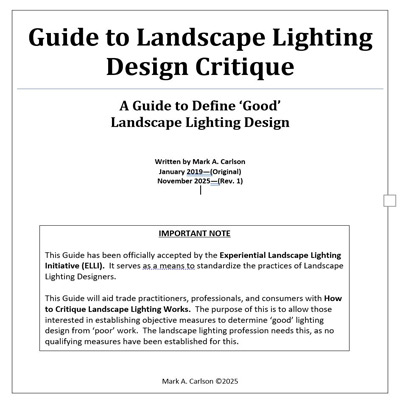
‘Guide to Landscape Lighting Design Critique’
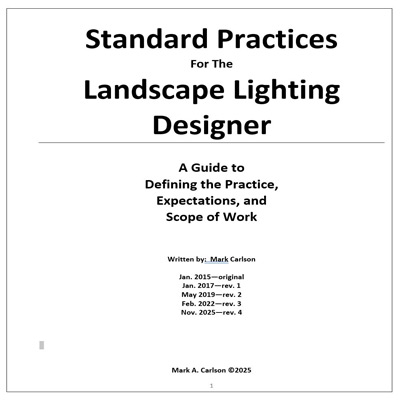
‘Standards for the Landscape Lighting Designer’
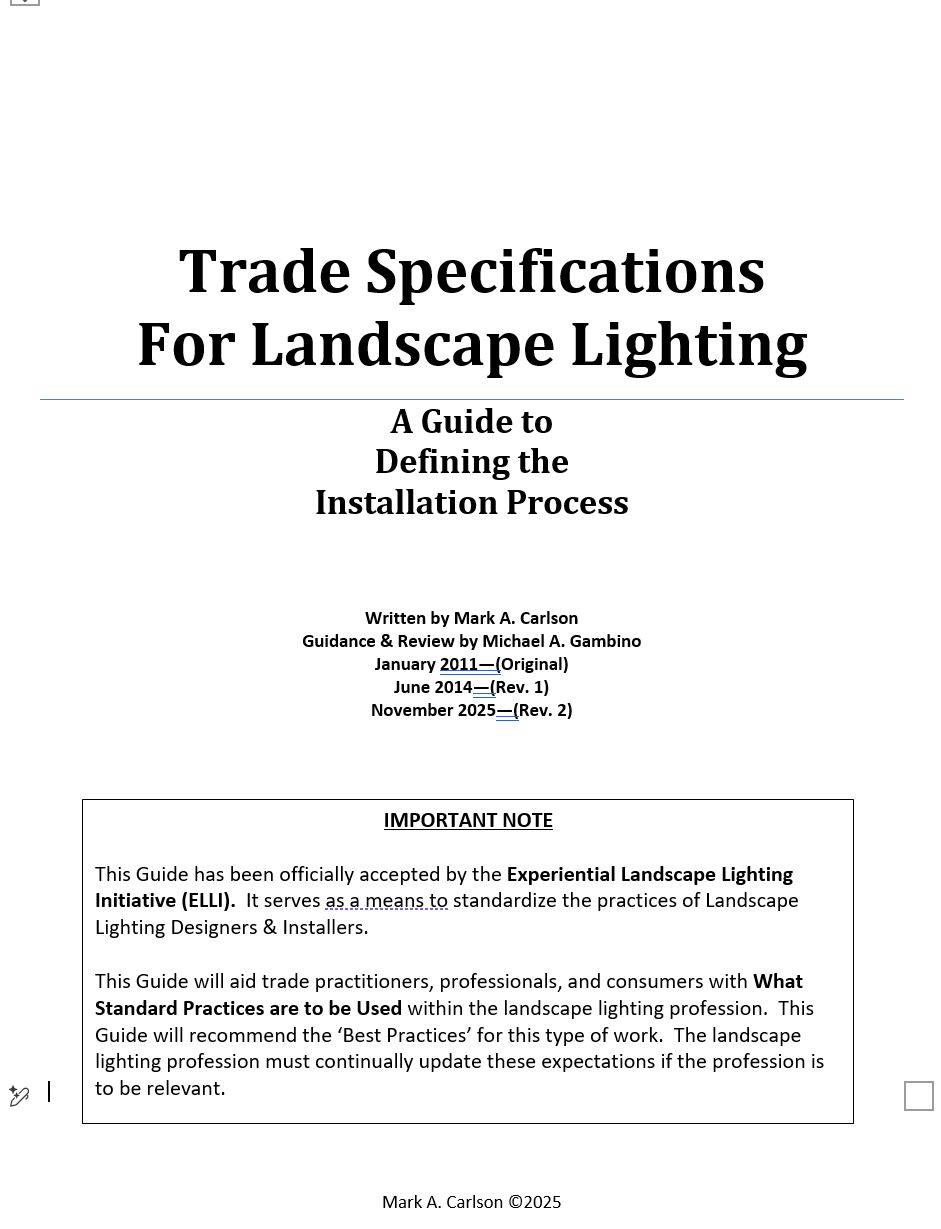
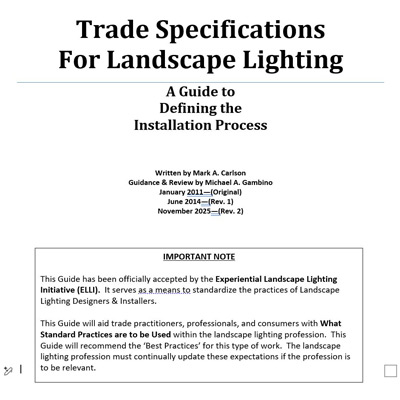
‘Low Voltage Landscape Lighting Trade Specifications’
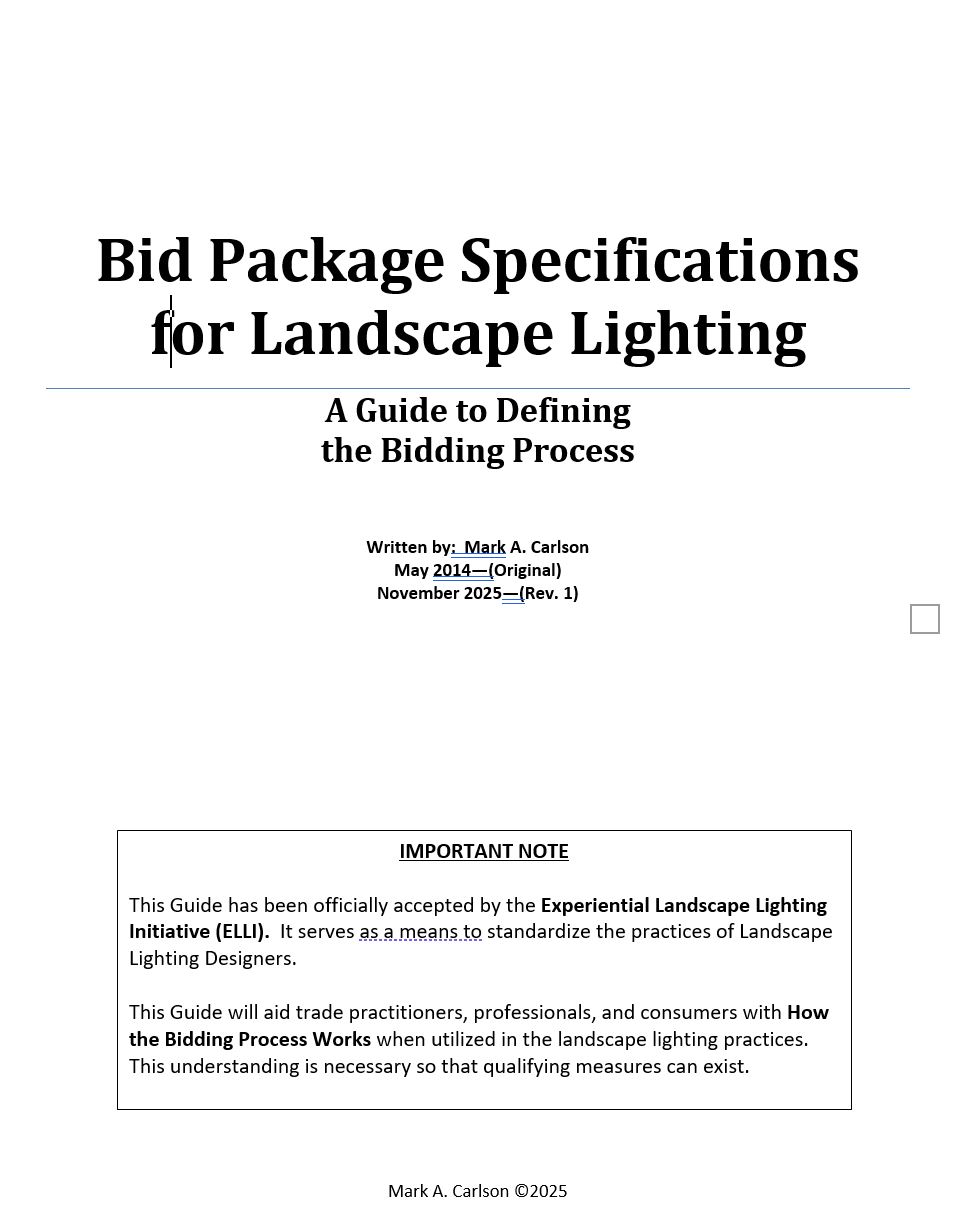
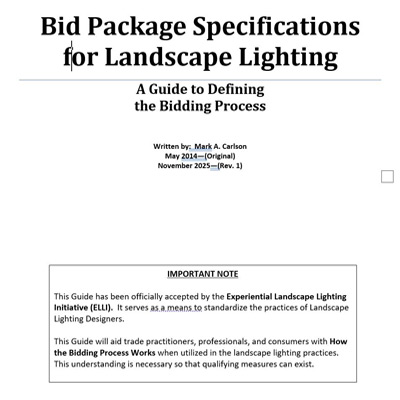
‘Bid Package Specification for Landscape Lighting’
Green Industry Interest Articles
- Pro Landscaper USA, Landscape Contractor, Home Improvement & Remodeling magazines
- Sunset magazine
- Professional Blog (2013-2015)—Avalon Lighting Design
Awards:
Awards programs are a great way to gain peer recognition and relevance by your work within the landscape lighting profession. It’s very difficult to gain recognition by any other method. However, with that said, I’d like to give you my personal opinion about the problems or challenges associated with these programs.
Currently, I do not support any Awards programs. The last time I did was in 2019. My reasoning for this is because none of them have utilized a set of solid parameters, principles, or measures. Therefore, this doesn’t ensure sound judgments for awarding individuals. Obviously, I could expand on this, but I’ll leave it there. Until changes are made in these programs, they provide little design relevance for the profession.
Note: I will address part of this problem as it is related to photographic manipulations. Today, many have the ability to edit and manipulate photos to looke better than they might be. This is a problem, as how can one determine how much these photos are changed? The point to submitting photos of projects is to ensure that the photos looks as close to what truly exists within the landscape scene. This cannot be assured. Those who support this kind of trickery are being unethical towards the intent of these award’s programs.
Regardless of this state and manipulation practice, I am hopeful that one day our profession makes the proper adjustments to govern such activities. The truth is that you cannot edit poor designs. Compositional principles will show through any manipulations, and this is what should be judged, not just aesthetics or the project size.
The following are awards that I was fortunate to receive (without manipulations):
- Illumination Engineering Society (IES)—“Illumination Awards”:
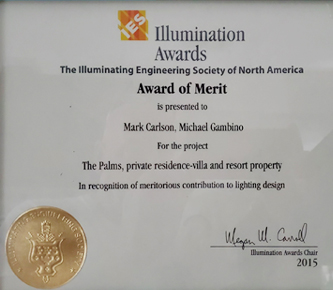
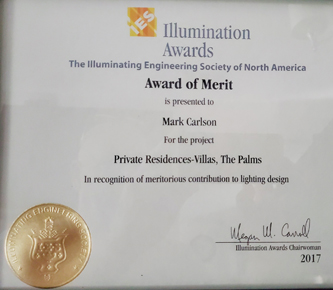
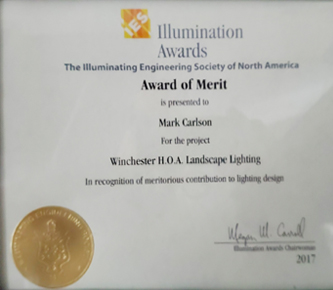
Category: Outdoor Lighting Design
Awards: Awards of Merit (3-awards)—2015 & 2017
- Association of Outdoor Lighting Professionals (AOLP):
Category: Best of Show
Category: Peer Recognition
Category: Design Committee Recognition
Category: Best Water Feature
Category: Best Landscape Structure
Award: Janet L. Moyer Award—2009
Award: Award of Excellence—2009
Award: Award of Excellence—2009
Award: Award of Merit—2009
Award: Award of Merit—2009
- Various Lighting Manufacturer Awards—2018-2019